Hard Realities and High Stakes: A Masterclass in Western Book Writing In USA
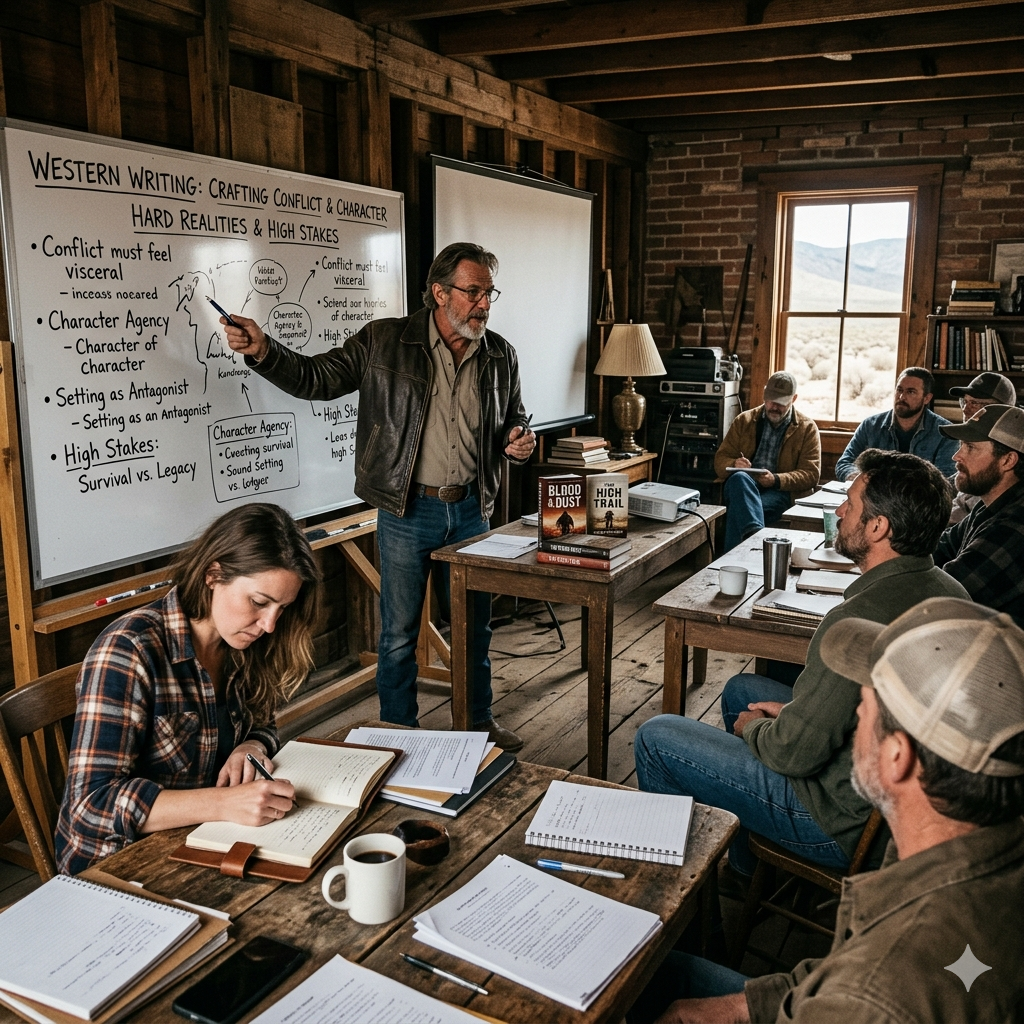
Western writing has a credibility problem. One wrong detail and readers call you out. That's why Western book writing in USA now depends on research, structure, and smart distribution. This guide skips the legends. You get straight, useful answers.
The Western Writing Courtroom Rule That Changes Everything
Most guides talk about gunfights. Let's talk about evidence. A strong Western novel writing project treats every scene like testimony. Want to show a character's moral code? Don't say they're honest. Show them refusing stolen cash. Show them riding extra miles to return a borrowed horse.
City crime stories get psychological. Westerns stay practical. Water rights. Land. Revenge for a specific person. When you hire professional Western writers in USA, ask them to connect each chapter to evidence that backs the hero's final choice. If they hesitate, walk away.
One Question Separates Pros From Amateurs
Ask any candidate: "What's the most common factual mistake you see in Western manuscripts?" A weak writer guesses. A good professional western writers in USA answers instantly.
Saddle types. That's the top error. Many writers know that a Western saddle from 1880 had a roping horn. Fine. But they mess up the cinch strap placement. Or they describe a military McClellan saddle on a cattle drive. That never happened.
Professional Western writers in USA keep actual reference books. Reprints of old Sears catalogs. They know barbed wire hit the market in 1874. They know the Colt Single Action Army revolver came out in 1873. These dates matter. A reader who spots a 1875 gun in a 1872 story closes the book. Then leaves a bad review.
Why Attribution Beats Word Count
Standard writing advice obsesses over length. Cowboy fiction writing services in USA care about something else: attribution frequency. In fast action scenes, long tags like "he exclaimed loudly" kill the pace.
The fix? Action beats instead of tags.
Example:
John patted his holster. "You sure about that?"
No tag needed. The action beat tells you who spoke. Cowboy fiction writing services train their writers to keep one action beat for every three or four lines of dialogue during chase or fight scenes. That specific ratio keeps readers moving.
The Non-Compete Clause Most Authors Overlook
Most authors know Western ghostwriting services include confidentiality. Few know about the non-compete. A reputable service adds a clause that stops the ghostwriter from producing a similar book for another client in the same subgenre. Usually one to two years.
Without that clause, a ghostwriter could take your plot, your character dynamics, your setting, and sell a nearly identical manuscript to someone else. The non-compete blocks that. When you negotiate Western ghostwriting services, ask to see that language. If it's missing, add it.
Project Handoff Protocols That Prevent Disaster
A Western writing company runs projects differently than a solo freelancer. The big difference is the handoff protocol. That's a documented process for moving partial work to another writer if the original writer leaves.
The protocol includes:
- A chapter-by-chapter status log.
- A character voice cheat sheet (specific sentence rhythms for each main character).
- A pending research list (facts that still need verification).
When you hire a Western writing company in USA, ask to see this protocol in writing. Without it, a sudden departure could freeze your project for weeks.
Which Provider Matches Your Project? A Side-by-Side Breakdown
| Provider Type | Best For | Research Handling | Handoff Protocol | Pricing Basis |
| Solo Freelancer | Standalone books | Writer's own knowledge | None | Per word or per project |
| Cowboy fiction writing services in USA | High-volume pulp series | Minimal, trope-based | Basic notes | Per book flat rate |
| Western ghostwriting services | Single-author series expansion | Third-party researchers | Series bible from client | Per manuscript plus royalty share |
| Western writing company in USA | Large projects with oversight | In-house fact-checkers | Formal handoff with logs | Per project based on research |
| Western writing agency in USA | Multi-author shared universes | Dedicated research department | Centralized database | Retainer plus per manuscript |
Pricing Based on Research Density, Not Page Count
Freelancers often charge per word. A Western writing agency in USA uses a different method. They price by research density. A book set in a well-documented town like Dodge City costs less than a book set in a remote Montana mining camp with few original sources.
The agency assigns three tiers:
- Tier 1: Standard locations with existing histories and maps.
- Tier 2: Less documented areas requiring county archive visits.
- Tier 3: Fictional towns needing full worldbuilding from period materials.
You pay for verification work. Not typing speed.
Digital retailers track where readers stop reading. That's the abandonment rate. For Western genre eBook writing in USA, the highest drop-offs happen at two spots: 8% into the book (after the opening hook) and 40% in (when subplots should start connecting).
Professional Western fiction writers build their manuscripts to handle these specific zones. At 8%, they reintroduce a threat. At 40%, they merge two separate character goals into one conflict. This comes from real Kindle Unlimited read-through data.
If a writer can't explain these two points, they aren't working with current data.
Why Chapter One Has No Flashbacks
Many genres drop flashbacks anywhere. Westerns don't. Professional Western fiction writers have a hard rule: no flashbacks in chapter one. Here's why.
A Western reader needs to anchor themselves first. They need to know where the dust comes from. Which direction does the sun set? Whether the town has a jail or just a tree. If you jump to a memory on page two, you force them to hold two time periods and two landscapes at once. That mental load makes readers quit.
What if you really need to show a past event early? Plant an object instead. A faded photograph tucked into a saddlebag. A specific scar on the protagonist's hand. A name carved into a wooden post outside a burned cabin. Each object hints at a backstory without leaving the present scene. The full explanation comes later, usually after the reader has walked through the current setting for at least three chapters.
This approach respects how Western readers consume the genre. They want the physical world first. Memories second.
The Metadata Checklist You Must Demand
A Western writing company in USA is not a single brand. It's a category of service providers spread across different states. Some operate out of Texas, close to the actual cattle trail archives. Others work from New York or California, relying on digital research databases. Geography affects what they know. A company based in Fort Worth might have staff who have handled authentic ranch documents. A company based elsewhere might need to subcontract local researchers.
That said, any credible Western writing company in the USA that offers distribution support will hand you a metadata checklist before publication. This is not a suggestion. Amazon's search algorithm ranks books largely on how well you fill out the backend fields.
What if they don't give you a checklist? Walk away. You'll end up with a book that technically exists on Kindle but never appears in "also bought" rows.
The checklist must include three items:
- Seven backend keywords – These are invisible to readers but critical for search. They must match specific Western subgenres. Example: "1870s cattle drive" not "cowboy adventure."
- A confirmed BISAC code – For westerns, that's FIC033000. Some companies try to use broader codes, such as "historical fiction." That buries your book.
- Three comparison titles – Books similar to yours that are currently selling well. Amazon uses these to understand your audience.
Without this checklist, your book stays invisible. A decent Western writing company in USA will not publish until you approve every line. If they rush you, they are cutting corners.
FAQs
How do ghostwriting services check historical facts from the 1800s?
They use researchers who always cross-check period maps, firearm manuals, and farm records from the late 19th century.
What is a typical delivery timeline for a complete manuscript?
Three to five months for a 60,000 to 80,000-word book, depending on how much original research it needs.
Can a full-service handle Kindle formatting and uploads?
Yes. Most full-service providers include internal formatting, metadata setup, and category selection for digital stores.
Why are Westerns selling well again on digital platforms?
Digital stores let niche readers find specific subgenres like "Weird West" or "Hard Westerns" that traditional publishers overlooked.
How do I test a writer's grasp of the genre before hiring?
Ask for a sample scene that includes a campfire conversation and a high-stakes negotiation. Check for Hollywood stereotypes and factual errors.
Last Call
You now have the checklist. The handoff protocols. The metadata fields. The non-compete language. None of it matters if you don't ask the right questions before signing a contract. Walk through each section of this guide with your potential provider. If they push back on a single item, that's your warning.
Get the details right. The genre will take care of itself.